Preflight Check
Documents ··· On Board.(Airworthiness, Registration, Journey Log, Insurance, POH, W&B, Emergency Chklist)
Fire Ext ··· Secured & Not discharged
First Aid Kit ··· On Board.
Controls ··· Free of motion and Correct.
Fuel Selector ··· Off then Desired Tank
Clock ··· Local Time and Functional.
Compass ··· Check for any leak & compass card present.
Avionics Master,Electrical Switches, Heater & Froster, Fan-Air, Alt Air ··· Off
ELT ··· Switch is armed position.(Do not turn on unless it is emergency.)
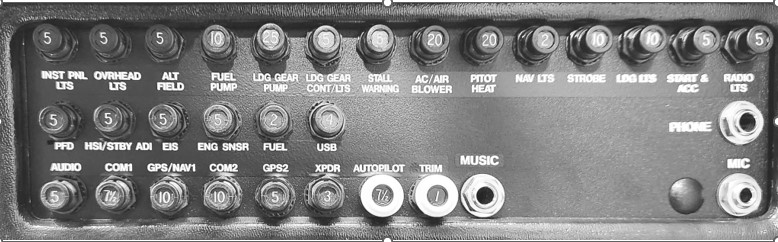
Circuit Breakers ··· In.
Mixture ··· Idle Cut Off.
Propeller ··· Full Forward.
Manifold ··· Closed (All the way down).
Gear Handle ··· Down Position.
Mags ··· Left and Right Switch off.
Flaps ··· Easily move all the position, then extend fully.
Trim ··· Check & Set.
Emergency Gear Lever ··· Up Position. If it is down, not be able to retract.
Battery Master ··· Turn On.
Hubbs Time ··· Noted.
Fuel Gauges ··· Check adequate fuel.
3 Gear Green Lights ··· Lit Up. (If Panel lights are on, this will be dim.)
Annunciator (Alternator & Oil) ····· ON.
External Lights / Pitot Tube: ··· Turn on / Check Visually / Intact
Turn on / Check Visually / Intact
Check - Pitot Tube Warms up
Check for Stall Warning Horn & Free of motion.
Electrical Switches ··· Off.
External Surface Check
All Tie/ Cowl & Pitot Cover ··· Removed.
Right Flaps ··· Checked.
Actuating arm & bonding strap – free of motion.
Right Aleron ··· Checked.
Actuating arm ··· free of motion.
Right Wing Tip/ Bulb/surface ··· Checked.
Right / Left Windows ··· Cleaned.
Right / Left Engine Cowl Latches ··· Locked.
Right side fresh air intake ··· Free from any obstruction.
Left side small hole by cylinder #2 ··· Check for any debris.
Propeller ··· No damage & Screws Intact.
Alternator Belt ··· Check for Tension.
Landing Light ··· Properly in-place.
Left side Temp Probe ··· Free & Attached.
Right Wing Tip / Bulb/surface ··· Checked.
Left Aleron ··· Checked.
Left Flaps ··· Checked.
Top Antenna ··· GPS, COM1, COM2, ELT.
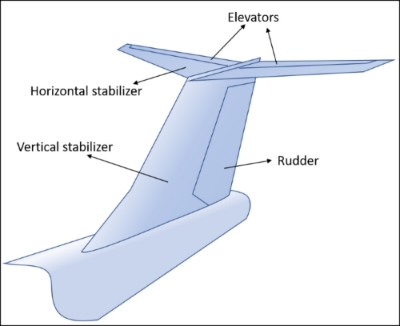
LEFT & Right Stabilator ··· Intact, free of motion, Tail Cone bolt in place.(Give a little tug to ensure Intact.)
Rudder ··· Slight Free of motion (No push).
Fuel ··· Check Cap cascade, Qty, Drained.,
Fuel Drain Check for any contamination / water. Fuel should be blue.
Oil Quantity ··· Check for 6 – 8 qt.
Oil Dip Stick ··· black rubber cascade.
External Underneath Check
Exhaust ··· Attached & Intact.
Fuel Vent ··· Clear of any Obstruction.
Gear Assembly:
Tire Inflated. Nose 27 | Main 30PSI
Tire thread good.
Oleo Strut – Should be 2.75” ±0.25” (3 finger space).
Nose Struct – 2.50inch ±0.25inch
Brake Calibour – no red fluid leak.
Gear door – properly attached to the aircraft.
Down Lock Switch – making contact with down lock hook. No bent.
Up Limit switch – should be straight & No bent.
Under Left Wing – Oil Breaher ·· Check for any debris.
Clean Trunnion Assembly (Siver area) and spary a bit lubricant
Next to the Oil Breather: Tube to vent fuel from engine driven fuel pump when excessive pressure.
Next to the Oil Breather: Tube to vent fuel from electric boot pump.
Next to the Oil Breather: Vent from intake system of the aircraft – Over prime situation, engine properly not shutdown, fuel will leak through sniffer valve out through this valve.
Next to the Oil Breather: Lower Service GPS Antenna ··· Ensure not thick coding of oil.
Battery Vents ··· Free from Obstruction.
Baggage Door ··· Closed.
Pre Start
Passengers Briefing: see section - Passenger SAFETY Briefing
| ✪ | Welcome aboard |
| S |
|
| A |
|
| F |
|
| E |
|
| T |
|
| Y |
|
Passengers ··· Briefed.
Flaps ··· Up.
Fuel Selector ··· Lowest Tank.
Doors ··· Secured.
Brakes ··· Set.
- Note: Cranking period – 10 sec. with 20 sec. rest between attempts. Max attempts 6. If no start, cool for 30 minutes.
Starting Engine – Cold
Prop Area ··· Clear.
Manifold ··· ½ Inch Open.
Propeller ··· Full Fine.
Battery Master / Fuel Pump ··· ON.
Mixture · Prime (Mixture full rich for 3 seconds) then ICO.
Mags - Keep Right OFF position and Left ON position ··· Push the button to start, Once started ON the right Button
When engine engages - Mixture full rich.
Engine Start – Hot
Prop Area ··· Clear.
Manifold ··· ½ Inch.
Propeller ··· Full Fine.
Mixture ··· Idle Cut-Off.
Battery Master / Fuel Pump ··· ON.
Mags - Keep Right OFF position and Left ON position ··· Push the button to start, Once started ON the right Button
When Engine Start · Mixture Full Rich.
Engine Start – Flooded
Prop Area ··· Clear.
Manifold ··· Open Full.
Battery Master / Fuel Pump ··· ON.
Fuel Pump ··· Off.
Mixture ··· Idle cut-off.
Mags - Keep Right OFF position and Left ON position ··· Push the button to start, Once started ON the right Button
Mixture ··· Mixture Full Advance.
Manifold ··· Retard.
Mixture ··· Lean.
Starting With External Power Source
Master Switch ··· Off.
All Electrical equipment ··· Off
Terminals ··· Connect
External Power plug ··· Insert in fuselage
Proceed with normal Start
Throttle ··· lowest possible RPM
External Power Plug ··· disconnect from Fuselage
Master Switch ··· ON - Check Ammeter
Oil Pressure ··· Check
After Start
Oil Pressure ··· Green (in 30 Sec). If not GREEN stop the engine and trouble shoot.
Warm-up ··· 1400 -1500 rpm. (Avoid prolonged idling at low rpm).
Ammeter ··· Check Charging - Turn off Alternator, then On.
Fuel Pump ··· Off.
Start Up Time ··· Noted.
Avionics Master ··· ON.
Beacon / Nav Light (same switch) ··· ON.
Transponder ··· Standby.
Radio / Instruments / Nav Aids ··· Set.
Ensure Oil Temp in Green before Taxi.
Rolling Break Test ··· Checked.
Instruments ··· Taxi Test.
ATIS ··· Obtain.
Taxi Clearance for run-up ··· Obtain.
Run Up
Area ··· Clear / Into Wind / Wheel Straight.
Brakes ··· ON.
Fuel Selector ··· Switch.
Throttle ··· 1000 rpm.
Temp / Pressure ··· Check in Green.
Mags ··· Check (Max 172/50 Difference – At low rpm, the difference might be larger than at high RPM).
Mixture ··· Rich.
Propeller ··· Full Fine.
Throttle ··· 2000 rpm.
Temp / Pressure ··· Check in Green.
Mags ··· Check (Max 172/50 Difference).
Mixture ··· Lever down until manifold drops, then go back.
Propeller Cycle: Do not go lower than 1500 rpm.
Prop lever down slowly & check:
- Increase in Manifold & Dropping rpm.
- Oil pressure – should be a drop.
- No oil sprayed on windshield.
Propeller Cycle: Do not go lower than 1500 rpm.
Alternate Air ··· Check - Closed.
Alternator ··· Check Charging by tuning on/off ALT switch.
Throttle ··· Idle.
Throttle ··· 1000 rpm.
Call GRN:118.4 For Taxi Clearance
Before Take-Off
Take off Distance (grn roll) ···· 1025 ft.
TOGO -> HDG:Runway -> Set Altitude -> Desired -> IAS:87KT.
Master, Fuel Pump, Landing, Strobe Light, Pitot Heat (as Required) ··· ON.
Transponder ··· ALT.
Instruments / Radio ··· Set.
Fan - AC ··· Off.
Mixture ··· Rich.
Propeller ··· Fine.
Trim ··· Set.
Flaps ··· As Required.
Controls ··· Free.
Door ··· Latched (top and bottom).
Take-off Pilot Briefing:
Frequencies set
Weather conditions / Winds
Runway __
Flap settings __°
Speeds: Rotate 65-75KIAS & Pitch for 76KIAS, after positive Rate - 87 KIAS
Departure routes / Navaids Set
Initial Altitudes ____
Our Go-No Go point will be intersection of the runway.
If Engine fails while rolling ··· Stop stright a head.
If Engine fails after take-off and not above circuit altitude ··· Land straight a head
If Engine fails after take-off and above circuit altitude ··· Consider comging back to the field
Take-off Briefing ··· Complete.
Take off Time ··· Noted.
Call TWR:120.1 For take-off Clearance.
Normal Take Off: (Max Weight Take off – 2750 lbs).
Windsock··Check Direction (left/right).
Heading Indicator··· Confirm Runway.
Manifold Pressure ··· Full.
Accelerate → 65-75 KIAS → Airspeed Positive → GO/NO GO → If GO → Rotate.
Pitch ··· 76 (Vy - Gear Down & Flap Up).
When Altitude Positive Rate:
Tap on the brakes to stop the wheel spinning. & Gear Up.
Manifold ··· 25 Inch.
Propeller ··· 2500 rpm.
Temps/Pressure ··· Green.
Landing/Strobe Light ··· Off.
Once reached 87KIAS: Hit: IAS, Nav, AP.
Shortr Field Take Off: (Max Weight Take off – 2750 lbs).
Windsock··Check Direction (left/right).
Heading Indicator··· Confirm Runway.
Flaps ··· 25° (second notch)
Manifold Pressure ··· Full.
Accelerate → 50-60 KIAS depending on aircraft weight → Airspeed Positive → GO/NO GO → If GO → Rotate.
After breaking ground, accelerate to 55-65 KIAS depending on Aircraft weight
Pitch ··· 77 (Vy - Gear Down & Flap Down).
When Altitude Positive Rate:
Tap on the brakes to stop the wheel spinning. & Gear & Flaps Up.
Manifold ··· 25 Inch.
Propeller ··· 2500 rpm.
Temps/Pressure ··· Green.
Landing/Strobe Light ··· Off.
Once reached 87KIAS: Hit: IAS, Nav, AP.
Soft Field Take Off: (Max Weight Take off – 2750 lbs).
Windsock··Check Direction (left/right).
Heading Indicator··· Confirm Runway.
Flaps ··· 25° (second notch)
Manifold Pressure ··· Full.
Accelerate → 50-60 KIAS → Airspeed Positive → GO/NO GO → If GO → Rotate.
After breaking ground, accelerte to 55 to 65 KIAS depending on aircraft weight
Pitch ··· 77 (Vy - Gear Down & Flap Down).
When Altitude Positive Rate:
Tap on the brakes to stop the wheel spinning. & Gear Up.
Manifold ··· 25 Inch.
Propeller ··· 2500 rpm.
Temps/Pressure ··· Green.
Landing/Strobe Light ··· Off.
Once reached 87KIAS, Flaps ··· retract slowly
Hit: IAS, Nav, AP.
Climb (APT:Attitude, Power, Trim)
Fuel Pump ··· On.
Temps/Pressure ··· Check.
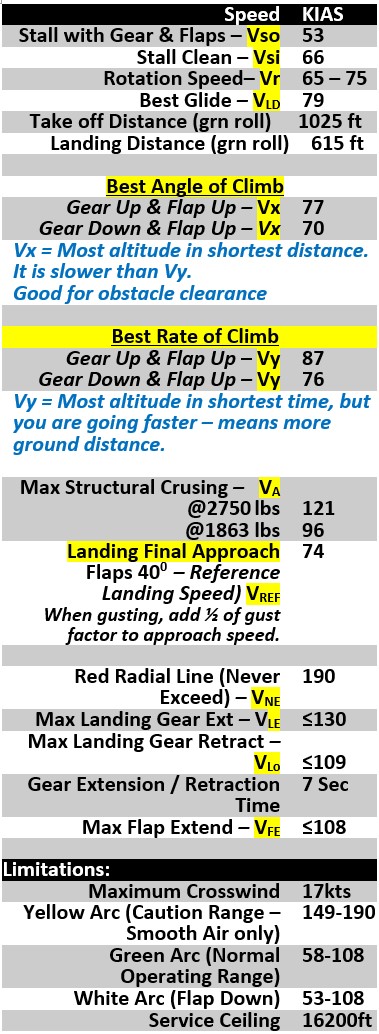
Vy - Best Rate of Climb:
- Gear up, flaps up ··· 87 KIAS.
- Gear down, flaps up ··· 76 KIAS.
Vy - Best Rate of Climb:
- Gear up, flaps up ··· 87 KIAS.
- Gear down, flaps up ··· 76 KIAS.
Vx - Best Angle of Climb:
- Gear up, flaps up ··· 77 KIAS.
- Gear down, flaps up ··· 70 KIAS.
Fuel Pump ···· Off at altitude reached.
Descend (PAT: Power, Attitude, Trim)
Fuel Pump ··· On.
Throttle ··· Reduce.
Yoke ··· Push Down / Adjust as required.
Cruise
NAV, AP, FD, IAS ··· ON
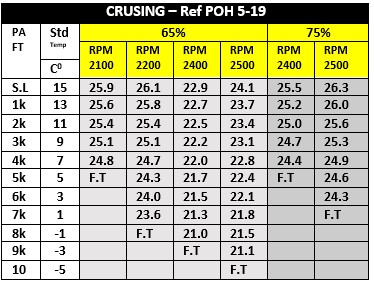
Normal max power ··· 75% Set (24”/2400).
Temps/Pressure ··· Check.
Mixture ··· Lean.
Switch Fuel Selector every 30 minutes: Fuel Pump On → Switch Tank → Engine Running → Fuel Pump Off.
Flight Instruments ··· Check.
Check Cylinders:
Pre-Landing
Landing Distance (grn roll)··· 615ft.
Weather/ATIS ··· Obtained.
Altimeter ··· Set.
Temps / Pressure ··· Green.
Seat Belt ··· Fasten.
Passenger Briefing ··· Complete.
Pilot Briefly:
Runway (Length, Condition)
Routing to Runway (circuit pattern)
Weather conditions, cross wind)
Approach Criteria (Speed, descent rate, slope)
Flap and Getar Considerations
Landing Speed - 74KIAS
Go-around point and plan
Call TWR 120.1: e.g. at Port Perry
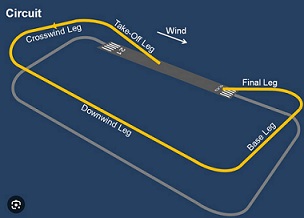
Down Wind
Manifold Pressure ··· 20 – 22 Inch.
Propeller ··· 2400 rpm.
Mixture ··· Rich.
Gear ··· Down ≤ 130KIAS.(Ensure Panel Lights off for Gear Indication.)
Flaps ··· 10° - Airspeed ≤ 108 KIAS.
Trim ··· Set.
Brakes ···Check/Feet Clear.
Mags ··· Both.
Master, Fuel Pump, Landing Light ··· ON.
Fuel Selector ··· Fullest Tank.
Temps/Pressures ··· Green.
Seats Belt ··· Fastened.
Air – AC ··· Off.
Base
Manifold Pressure ···15 Inch.
Flaps ··· 20°.
Gear ··· Check for Down & 3 Green.
Final Approach (Max Landing – 2750 lbs)
Flaps ··· Full / Desired.
Landing Approach – Flaps 40° ··· 74 KIAS.
WindSock - Wind from Left or Right.
Landing Clearance ··· Yes.
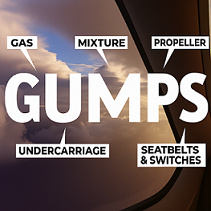
GUMPS CHECKS:
G - Gas (Fuel) ··· Switch to Fullest Tank (Fuel Pump is already ON).
U - Gear Down & 3 Green light ON.
M - Mixture ··· Full Rich.
P - Propeller ··· Full Fine.
S - Switches (Landing Light) - As required.
Short Final
WindSock - Wind from Left or Right.
Landing Clearance ··· Yes.
Overshoot (PAT: Power, Attitude, Trim)
Props ··· Fine.
Mixture ··· Rich
Throttle ··· Full.
Positive Climb, Flaps up ··· in states
Missed Approach
Set ··· Missed Approach Altitude.
Hit ··· TOGO.
Set ··· Full Power.
Flaps ··· Up.
Hit ··· Nav.
After Landing
Throttle ··· 1000 RPM.
Propeller ··· Full Fine.
Mixture ··· Lean.
Fuel Pump ··· Off.
Transponder ··· Standby.
Lights (Taxi Light) ··· As Required.
Flaps ··· Retracted fully.
Landing Time ··· Noted.
Flight Plan ··· Closed.
Call GRN 118.4: Taxi to T2 Hangar.
Shutdown
Fuel Pump/Lights/Air - AC ··· Off.
Avionics Master ··· Off.
Throttle ··· Idle.
Ignition ··· Live Mag Check.
Throttle ··· 1000 rpm.
Mixture ··· ICO.
Master / Mags ··· Off.
Passenger SAFETY Briefing
S - Seat Adjust. Seatbelt latch/unlatch, Doors/windows latch & Unlatch
A - Air Vent, Actionin case of any passenger emergency
F - Fire Extinguisher.
E - Exit door, Emergency evacuation plan, First Aid Kit & ELT
T - Look out traffic for me.
Y - Any question?
Pre-Takeoff Passenger Briefing
We are ready for takeoff.
Stow any loose objects
Stay free of my controls
Keep your seat belt on
Refrain from talking unless it is an emergency.
Are you good to go?
Pre-Takeoff Pilot Briefing
Frequencies set
Weather conditions / Winds
Runway __
Flap settings __°
Speeds: Rotate 65-75KIAS & Pitch for 76KIAS, after positive Rate - 87 KIAS
Departure routes / Navaids Set
Initial Altitudes ____ feet
Our Go-No Go point will be intersection of the runway.
In the event of an engine failure during the takeoff roll we will stop straight ahead.
If airborne, we will pitch for the 79kt, and land straight ahead.
If an engine failure occurs above 1000 feet AGL we will consider returning to the airport.
Once made to the field, set flaps as required.
Unlatch Cabin door.
Mixure cut, fuel off, mags off & master off.
Are you good to go?
Request Taxi to Main Apron
OSHAWA GROUND, Piper Arrow, Golf Victor Bravo Victor
Reply from Oshawa Ground: Victor Bravo Victor, Oshawa Ground
Oshawa Ground, Victor Bravo Victor
Over Tango 2
Requesting Taxi to Main Apron.
Enroute Radio Call
{some Place} Traffic
Piper Arrow, Golf Victor Bravo Victor
Over {some place} at {____} feet
enroute for {Destination}.
Request Transiton
{en-route ATC, ie., Toronto Center}
Piper Arrow, Golf Victor Bravo Victor
Over {some place} at {____} feet
request VFR transition through your airspace to {destination} maintaining {____} feet
Memory Aids
| ITPAID | Identification, Tail Number, Place, Altitude, Intention, Destination. |
| POISEE |
|
| FLARE |
|
| CIGAR |
|
| CRAFT |
|
| BLITTS |
|
| When Yes |
|
| When No |
|
Do & Don't
- Warm-up the engine at 1400 to 1500 RPM. Avoid prolonged idling at low RPM, as this practice may result in fouled spark plugs.
TIPS
Weather
- When Temperature and Dewpoint closer to each other, expect condensation, fog, percipitation, thunderstorms, icing
- When weather goes down, factor in: Low cloud, rain, lightening, thunderstorm, wind
- When wind gusts: Variability (sudden change in speed and direction), Turbulence, longer time in the air
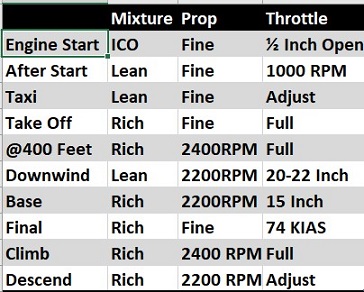
Cruise Setting
- Cruise 65% / 75%
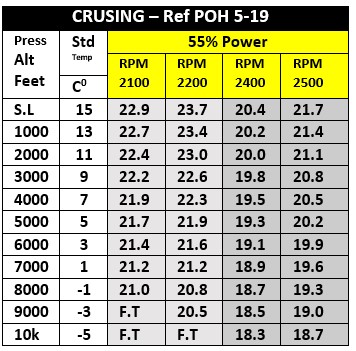
- Cruise 55%
Airspeed
- Various Airspeeds
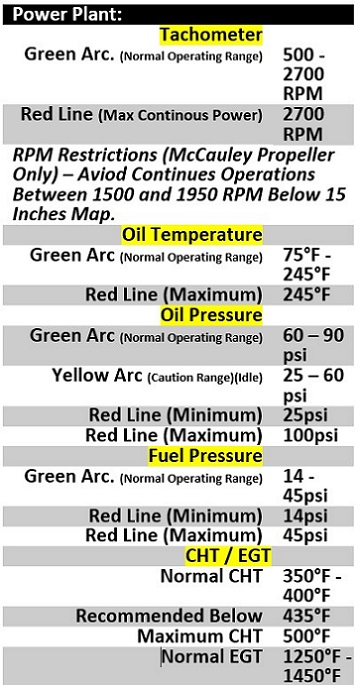
Power Plant
- Power Plant